Warren Buffett, long regarded as one of the most influential investors in the world, has announced he will step down as CEO of Berkshire Hathaway at the end of 2025. His chosen successor, Greg Abel, will take over as CEO, while Buffett will remain as chairman for the foreseeable future. Berkshire Hathaway is one of the world’s largest publicly traded conglomerates, with investments spanning insurance, finance, energy, transportation, and manufacturing. This transition raises important questions for investors not only about the company’s future but also about the continued relevance of Buffett’s investment philosophy in today’s rapidly changing financial landscape.
Buffett’s Philosophy: Simplicity and Consistency
Warren Buffett has consistently emphasized that successful investing does not require being a Berkshire Hathaway shareholder or spending countless hours analyzing individual companies. In his estate plan, he famously recommended that 90% of his wife’s inheritance be invested in a low-cost S&P 500 index fund, and the remaining 10% in short-term government bonds. According to Buffett, this straightforward strategy outperforms most individual and institutional investors who rely on expensive funds and active asset management.
Buffett’s focus on index funds is deliberate-they offer broad diversification and, crucially, minimize costs, which are one of the main barriers to achieving strong long-term returns.
Why Index Funds?
Buffett’s endorsement of index funds is based on several key advantages:
- Very low fees
- Broad diversification
- No need for active management
Lower costs directly translate into better long-term results, making index funds an attractive option for investors across Europe, the US, Canada and probably the rest of the world.
US vs. Global Markets: Historical Returns
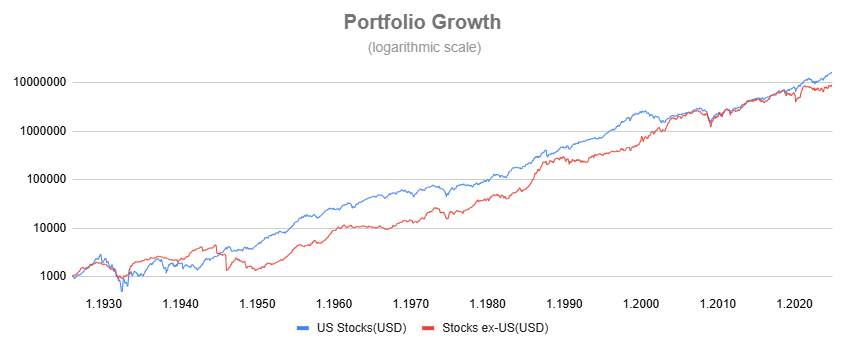
While the US stock market has delivered impressive returns over the past decades, history shows that American dominance is not guaranteed. From 1926 to 2024, the real annual return for US stocks was about 7.1%, compared to 6.4% for markets outside the US. There have been periods when other regions outperformed the US, highlighting the importance of global diversification for investors seeking long-term stability.
Building a Buffett-Inspired Portfolio in Europe and North America
Thanks to the growth of the ETF market, investors in Europe, the US, and Canada can easily replicate Buffett’s approach or opt for even broader global diversification. Here are some examples of ETFs available in Europe and North America:
- S&P 500 ETFs: CSPX, VUSA, VUAA, P500 (UCITS ETFs); IVV, VOO, SPY (US/Canada)
- Short-term US Treasury Bond ETFs: IBTA, VDST, PR1T, U13CX (UCITS ETFs); SHV, VGSH, SHY (US/Canada)
- Global Equity ETFs: FWRA, ACWD, SCWX, VWRD (UCITS ETFs); VT, AVGE (US/Canada)
- Global Bond ETFs: EUNA, AGGG, XBAG (UCITS ETFs); BNDW, AGGG (US/Canada)
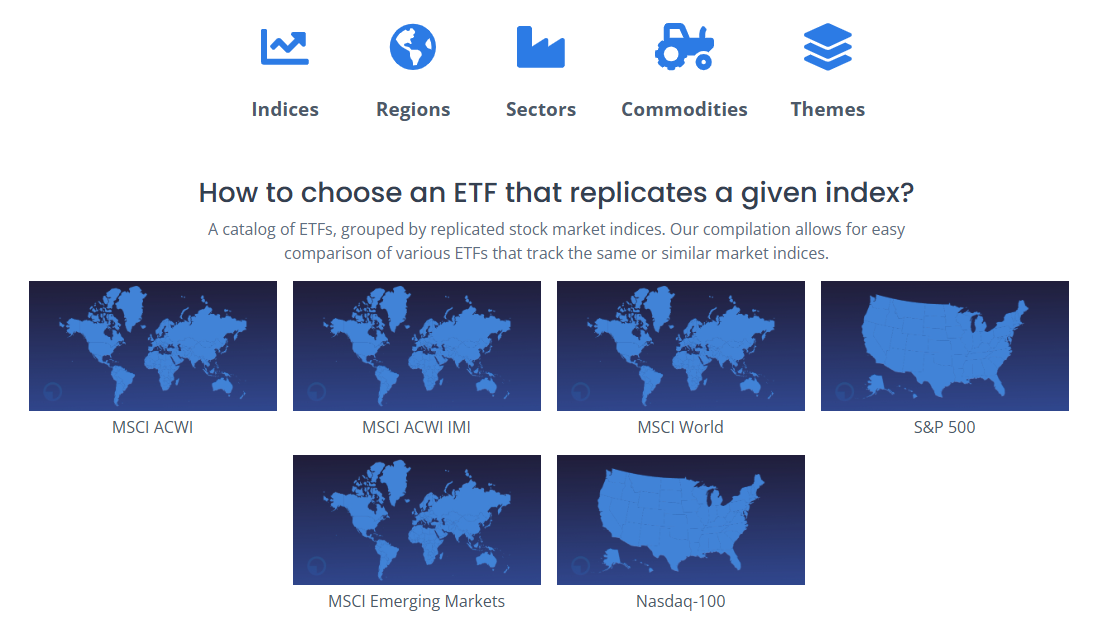
Investors looking for comprehensive ETF rankings and educational resources can explore etfatlas.com, which offers detailed rankings for US and Europe-domiciled ETFs categorized by indices, regions, sectors, commodities, and investment themes. Each ETF profile includes in-depth information and analytics, making it easier to compare options and select the best funds for your portfolio.
Buffett Portfolio US-based vs. Global
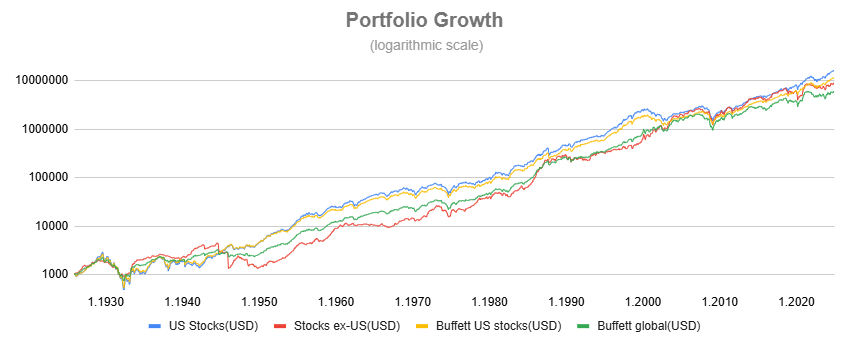
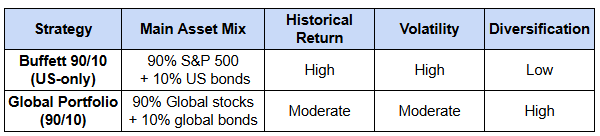
Historical analysis of passive portfolios shows that the “Buffett 90/10” model (90% S&P 500, 10% bonds) has delivered high returns but with significant volatility. An alternative is a globally diversified portfolio, such as one based on the FTSE All-World Index plus bonds, which has historically provided slightly lower returns but greater stability. Concentrating solely on one market (like the US) increases risk, so geographic diversification is especially important for long-term investors.
Below we present the Buffett portfolio in both the “US-only” and “global” versions for the years 1926–2024. Due to the lack of data on short-term US Treasury bonds over such a long period, in both cases we used medium-term US bonds.

Here is a simple comparison of two popular passive investment strategies inspired by Warren Buffett’s approach. The table below highlights the differences in asset allocation, historical returns, volatility, and diversification between a US-focused portfolio and a globally diversified one. This overview can help investors choose a strategy that best matches their risk tolerance and long-term financial goals.
If you want to test the Buffett strategy or other investment approaches across different time periods, you can use the free “Passive Portfolio Simulator” tool. Simply sign up for the etfatlas.com newsletter to gain access to this spreadsheet.
What’s Next After Buffett?
The change in leadership at Berkshire Hathaway does not alter the core investment principles Buffett has advocated for decades. Passive investing, cost minimization, broad diversification, and consistency remain the pillars of a successful strategy, as confirmed by decades of market data. Implementing these principles does not require being the “Oracle of Omaha”-any investor can achieve satisfying results by sticking to them.
However, it’s important to remember that a portfolio with 90% equities can be highly volatile and may experience prolonged downturns. Patience and discipline are essential to staying the course through market cycles.
Summary
Warren Buffett’s retirement marks the end of an era, but his investment philosophy remains as relevant as ever: simplicity, low costs, and broad diversification are the best path to building wealth. Modern investors in Europe, the US, and Canada have unprecedented access to efficient tools-like ETFs-that make it easier than ever to follow these principles. By making smart use of these resources, investors can confidently implement proven investment strategies for the future.